Pruning and Repotting Flower Containers
Airflow pruning for crowded balcony bloomers, when to pot up by 2–5 cm diameter, and how to tease circling roots without shredding the plant.
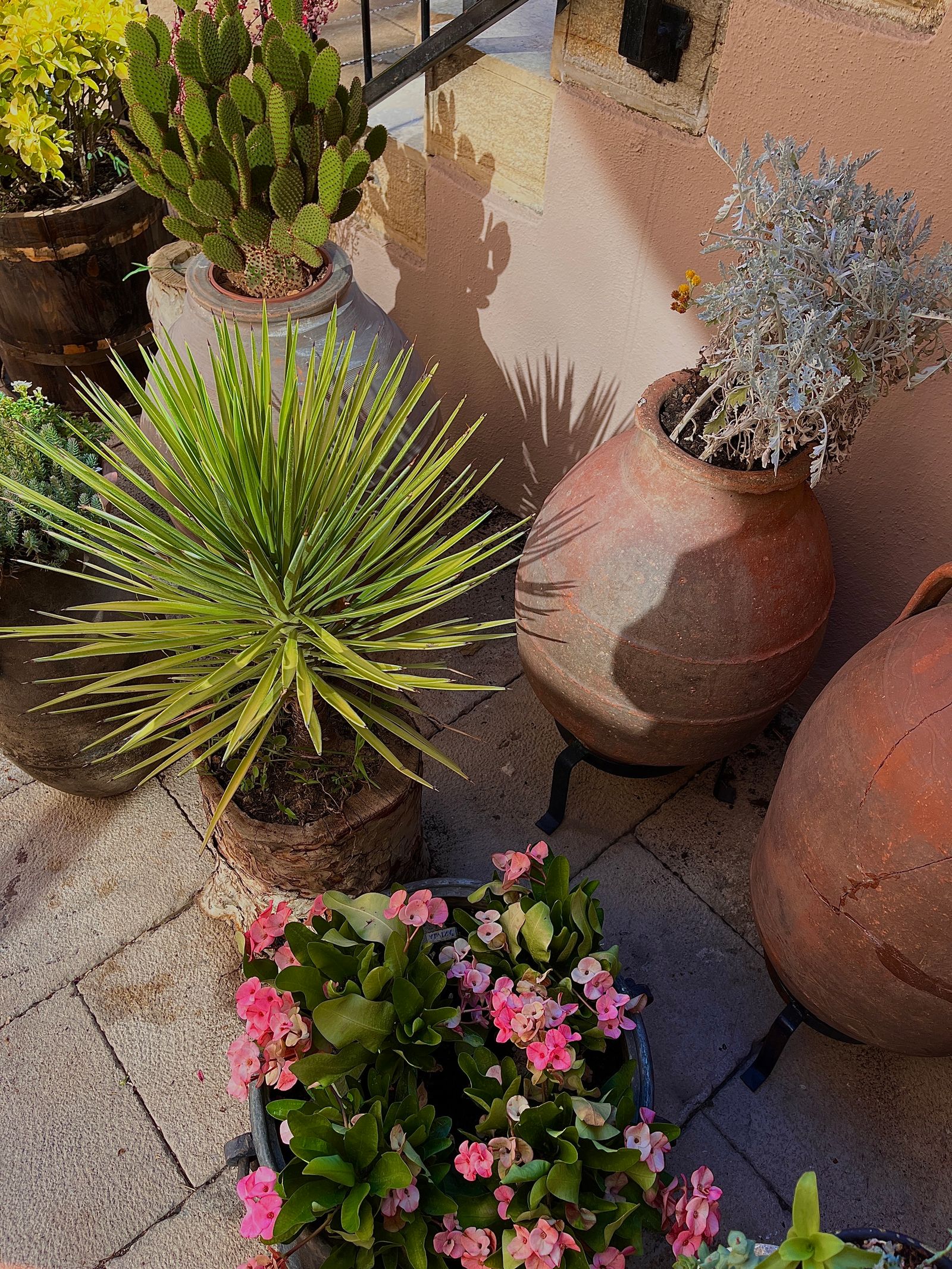
Photo: Pexels contributor / Pexels · free stock, attributed
USDA 6–8 urban balconies pack flowering foliage into a small air column. Dense stems stay wet after rain, invite mildew, and block the rail walkway. Roots hit the wall of a small pot, circle, and leave the mix hydrophobic. Pruning without repotting leaves a choked rootball; repotting without thinning a jungle puts a larger wet mass on the slab for the same congested canopy.
In hotter climates, avoid heavy root work during extreme heatwaves. In colder zones, finish major repotting early enough for roots to settle before autumn chill.
Airflow pruning for bloomers
Goal: open the center, remove weak wood, and keep leaves dryable after watering — on roses, chrysanthemums, hydrangeas, jasmine, and soft annual color pots.
What to cut
| Cut | Why |
|---|---|
| Dead, broken, or diseased stems | Removes inoculum; cut to healthy tissue |
| Inward-crossing branches | Opens the middle for wind and light |
| Lowest leaves resting on wet mix | Reduces rot and fungus gnat cover |
| Spent bloom stalks (deadhead) | Tidies the pot; some species rebloom after clean cuts |
| Soft tips on annuals (pinch) | Bushier growth; more flowering nodes |
| One crowded stem of three rubbing stems | Stops girdling wounds |
Use clean bypass snips. Wipe blades with alcohol between diseased plants. Make cuts just above a node or at the branch collar — do not leave long stubs.
Species notes: follow the seasonal guides for container roses, chrysanthemums, and hydrangeas when bloom timing matters. This page covers the shared container mechanics.
Timing cues (zones 6–8)
- March–April: Structural clean-up on hardy woody bloomers after winter damage is obvious.
- May–June: Pinch soft annuals once plants reach about 15 cm; thin congested centers on leafy feeders.
- July–August: Light maintenance only during heat; heavy cuts stress plants that are already wilting at 3 p.m.
- September: Last shaping for plants that will overwinter outdoors; avoid stimulating tender flushes right before frost.
Do not strip more than about one-third of a healthy canopy at once on woody flowering shrubs. Soft annuals tolerate harder cutbacks when restarting a flush.
When to pot up
Repot when roots circle the outside of the rootball, water runs straight down the pot wall without wetting the center, or the plant wilts daily despite moist mix.
Increase diameter by about 2–5 cm (roughly one pot size), not a leap from a 15 cm pot into a 40 cm tub. Oversizing leaves a large volume of wet mix that roots cannot dry — a fungus-gnat and root-rot invitation on cool north balconies.
| Current pot (approx. diameter) | Next pot |
|---|---|
| 12–15 cm | 15–18 cm |
| 18–20 cm | 20–25 cm |
| 25 cm | 28–30 cm |
Very large jumps make sense only for fast annuals you intend to water carefully, or when combining into a known wide planter with excellent drainage. Check wet mass with the pot and soil weight calculator before lining one rail edge with several upsized ceramics.
Root teasing without wrecking the plant
- Water the day before so the rootball slides out in one piece.
- Tip the pot; support the stem with fingers while easing the rootball free. Squeeze flexible pots; tap rigid ones.
- If roots form a white mat around the outside, tease the mat with fingers or a clean chopstick: loosen the outer 1–2 cm, unwind obvious circles, and lightly score only if the mat is cement-hard.
- Do not blast the entire ball with a hose until it is bare roots unless you are dividing or rescuing a rotten center.
- Set the plant in fresh mix at the same soil line as before (most flowering shrubs resent a buried crown).
- Fill sides, firm gently, water until drainage runs, empty the saucer after 30 minutes.
Fresh mix should drain freely. Reusing old, collapsed peat-only media without amendment often recreates the waterproof core problem within a season — see balcony soil mix.
Aftercare
Keep the plant in bright conditions suited to the species, but out of harsh west afternoon sun for 3–7 days if a lot of roots were disturbed. Do not fertilize hard on day one; wait until new growth shows. Expect a few lower leaves to yellow after repotting — that is stress shed if the crown stays firm (yellow-leaf diagnosis).
Weight and neighbor notes
Every pot-up adds wet soil weight. Before moving several bloomers into 25–30 cm pots along one rail edge, check building guidance and balance loads. A line of oversized ceramic cylinders against a single railing panel is a structural question, not a styling one — see weight-safe layout.