Balcony Soil Mix and Worm Castings
Volume-ratio recipes for drainable balcony pots, 10–20% worm castings as mix or top-dress, and why rocks in the bottom make roots wetter.
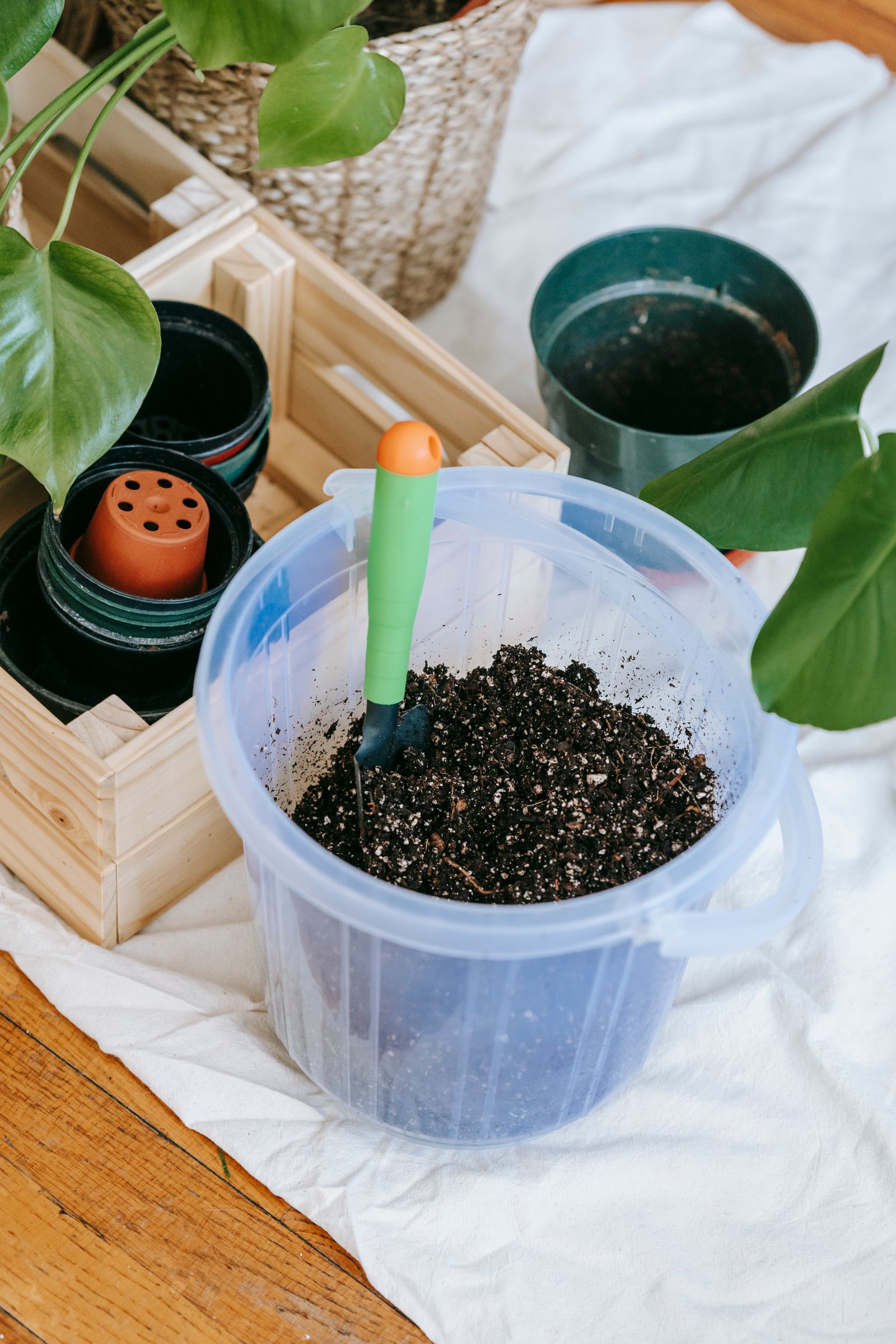
Photo: Teona Swift / Pexels · free stock, attributed
On USDA 6–8 urban balconies, container roots live in a closed volume that can swing from bone-dry to saturated in one hot afternoon. Hotter sites need sharper drainage and more frequent feeding; colder sites use the same ratios but start potting later in spring. Bagged garden soil compacts in pots and stays wet — use soilless or peat/coir-based mix and amend it deliberately.
Why not a gravel layer
Gravel, broken crock, or packing peanuts under potting mix does not improve drainage. Water perches at the fine-to-coarse interface, the saturated zone rises toward roots, and usable mix depth shrinks. Fill the pot with mix from the drainage hole to the rim, leaving 2–3 cm headspace for watering. Cover large holes with mesh scrap so mix does not wash out — nothing else.
Elevate pots 1–2 cm on feet or tile strips so the hole can drip. A saucer that stays full overnight recreates the same perched water the gravel layer was meant to prevent.
Base mix recipes (by volume)
Use one scoop for all “parts.” Ratios are volume, not weight.
| Mix | Recipe | Best for | Notes |
|---|---|---|---|
| All-purpose balcony | 2 peat or coir : 1 perlite : 1 fine bark or composted pine | Herbs, greens, most flowers | Check wet weight with the pot soil weight calculator |
| Extra-drain fruiting | 2 peat/coir : 1.5 perlite or pumice : 0.5 compost | Tomatoes, peppers in 20 L+ | Dries faster in July–August |
| Moisture-buffer | 2 coir : 1 vermiculite : 1 perlite : 0.5 compost | Mint, cucumbers, self-watering reservoirs | Still requires open drain holes |
| Seed / microgreen | Fine seed-starting mix (or sifted peat/coir) + light perlite | Trays ≥10 cm deep | Castings ≤5% or omit in germination mix |
Commercial container mix with visible perlite can substitute for the peat/coir + perlite base; fluff compressed bales after wetting. Do not use straight compost as the only medium — it settles and can go anaerobic in deep pots.
Worm castings: 10–20%, not half the pot
Castings are fine, dense, and nutrient-rich. High percentages hold water like clay and turn a drainable blend muddy. Use them as a minor fraction:
- Mixed at potting: 10–15% by volume for most edibles (example: 9 L base + 1–1.5 L castings for a ~10–11 L fill). Cap at ~20% for heavy feeders in large pots when the rest stays coarse.
- Top-dress midseason: 0.5–1 cm worked into the top 2–3 cm in June and after first heavy fruit set; water in. Keep castings off stems.
- Casting tea (optional): steep a small handful, use within 24 hours on already-moist mix — supplement only, not a full feed program.
Castings do not replace balanced fertilizer once fruiting crops hit peak summer. Starter charge in bagged mix often leaches out after 3–6 weeks of daily watering in zones 6–8; schedule dilute feeds separately.
Potting sequence
- Confirm open drain holes; clean mineral crust and old roots from reused pots.
- Pre-moisten mix until it clumps lightly then falls apart — dry peat sheds water and leaves dry pockets.
- Fill with mix only (no gravel). Settle with light taps, not fist compaction.
- Plant at nursery depth unless the crop guide specifies otherwise (tomatoes can go deeper; peppers and basil stay at the original line).
- Water until slight runoff; empty saucers within 30–60 minutes.
Estimate wet mass before lining up several 25 L pots — use the pot and soil weight tool.
Season cues (zones 6–8)
| Period | Action |
|---|---|
| March–April | Refresh mix for frost-tender crops; do not recycle last year’s tomato mix onto new nightshades |
| May–June | Blend castings at transplant; light top-dress once established |
| July–August | At ≥32°C, coarse mix dries fast — mulch surface 1–2 cm with fine bark; do not add castings to “fix” drainage |
| September–October | Reduce feeding; store fabric pots dry if winter wet is constant |
pH, reuse, and rescue
Balcony water and bagged mixes usually sit near neutral. Acid-leaning ornamentals (some hydrangea color shifts, jasmine) favor peat/coir-heavy blends; use products labeled for acid-loving plants at labeled grams-per-liter rates — do not pour household acids freely.
| Goal | Move | Check |
|---|---|---|
| Sharper drainage | Add 10–20% perlite or pumice to compressed bagged mix | Water exits within about a minute |
| Slightly more acidic blend | Higher peat/coir; pine bark fines | Plant response over 2–3 weeks |
| Reuse ornamental mix | Remove roots, dry, blend 1:1 with fresh mix + fresh perlite | Never reuse diseased nightshade mix on new tomatoes/peppers |
| Sour, anaerobic smell | Discard mix | Start clean; more castings will not rescue it |
For feeding after starter charge fades, see fertilizing thin and often.
Sources
- UC Master Gardeners of Santa Clara County — Drainage in containers
- UC ANR Stanislaus Sprout — Adding gravel does not improve drainage
- Colorado State University Extension — Container gardens