Container Roses for Small Balconies
Step-by-step potting, watering intervals, feeding rates, and disease control for compact roses in USDA 6–8 balcony containers.
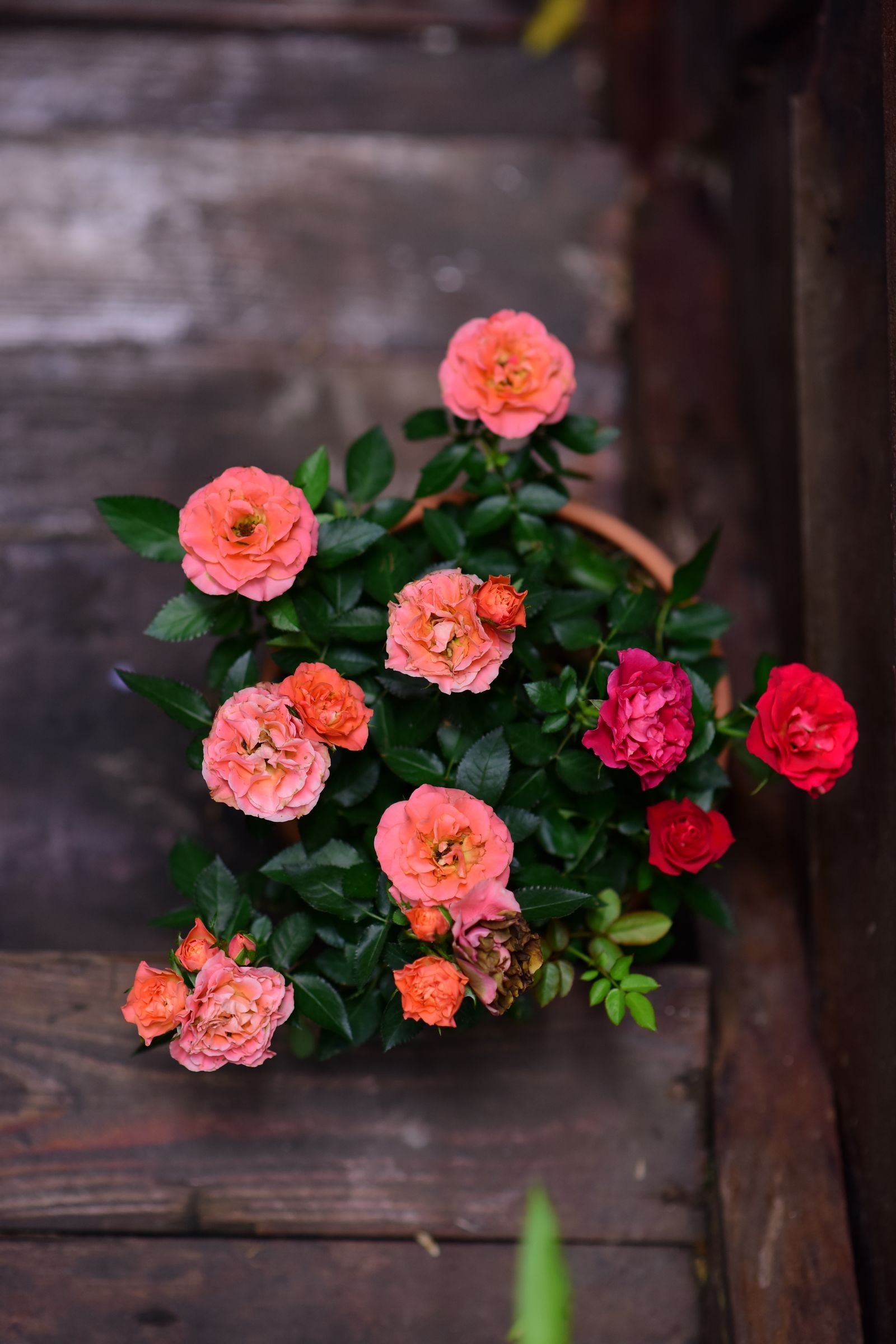
Photo: Sóc Năng Động / Pexels · free stock, attributed
Compact patio and miniature roses fit small temperate balconies (USDA 6–8) when they receive 6+ hours of direct sun, steady drainage, and airflow between pots. Unshaded west glass and still, damp corners increase blackspot and powdery mildew. This guide assumes roughly ≤1 m² of rail or floor space per plant unless load limits allow more.
Materials
| Item | Specification |
|---|---|
| Cultivar | Patio, miniature, or short floribunda types; avoid tall shrub roses on narrow rails |
| Pot (young plant) | 4–8 L (≈1–2 gal); wider base preferred in wind |
| Mix | Peat or coir + perlite + fine bark; no dense garden soil |
| Tools | Bypass pruners, soft ties, watering can |
| Pest products | Only after pests are confirmed; label-compliant |
Upsize by 2–5 cm diameter when roots circle the outer mix — not into a deep tub in one step.
Potting procedure
- Unpack in shade. Mist foliage if travel-dried; do not hold plants in a hot stairwell.
- If midday air exceeds ~28°C, repot in evening. Slide the root ball out; keep it intact unless nursery soil is a waterlogged plug — then tease only the outer 1–2 cm.
- Set the graft or bud union at the same depth as in the nursery pot (or slightly above the mix line in cold zone 6 winters where you may mound later).
- Fill with drainable mix; leave 2–3 cm headspace. Water until runoff; empty saucers within 1 hour.
- Harden in bright shade 3–5 days, then move to the sunniest rail that is structurally safe.
- On small plants, remove open travel buds so energy goes to roots and shoots first.
Settle mail-order plants using mail-order settling before full sun exposure.
Water, feed, and deadheading
| Task | Interval (zones 6–8) |
|---|---|
| Water | Finger test at 5 cm depth; daily checks common in ≥30°C sun |
| Feed | Dilute liquid every 7–14 days in active growth; pause during heat wilt |
| Deadhead | Cut spent blooms to a leaf with an outward-facing bud |
| Winter (zone 6) | Group pots against wall; protect crown or mulch pot surface 3–5 cm |
| Winter (zone 8) | Often overwinter outdoors if holes stay open and saucers are empty |
Thin-and-often feeding matches limited root volume — see fertilizing containers.
Pests and diseases
- Spider mites — Fine stippling and webbing on leaf undersides in hot, dry spells. Rinse undersides with water every 2–3 days early; use a labeled miticide only if populations persist.
- Aphids — Rinse soft tips with a firm water stream; isolate heavily colonized pots before labeled insecticidal soap.
- Blackspot / powdery mildew — Increase sun and spacing first; remove badly spotted leaves; avoid evening overhead watering that leaves foliage wet overnight.
Preventive weekly fungicide calendars from ground gardens often over-treat windy balconies with good sun. Start with sanitation and airflow.
Month cues (zones 6–8)
| Month | Task |
|---|---|
| Mar–Apr | Pot after hard-freeze risk; quarantine new plants |
| May–Jun | Soft ties; thin feed; first deadheading |
| Jul–Aug | Daily water in heat; mite scouting — heat watering |
| Sep | Many patio types still bloom; ease nitrogen |
| Oct–Nov | Clean fallen leaves; freeze–soak protection in zone 6 |
Wind and weight
A rose in 8–15 L of wet mix is a two-hand lift but still a projectile in storms if the pot is tall and lightweight. Use wider bases; brace lightweight plastic with mass at the pot foot. Review pots that stay put. Do not hang large rose pots from unrated railing hooks.
Limitations
- Tall climbing or old-garden roses need verified slab load and vertical support not covered here.
- Shared rails: keep sprays off edible herbs, or move herbs before treatment.
- Sudden pale leaves after repotting usually mean overwatering, not an immediate fertilizer crisis — check drainage first.