Hydrangeas in Balcony Containers
Container liters, light hours, irrigation, soil pH effects on bloom color, and pest response for big-leaf hydrangeas on USDA 6–8 balconies.
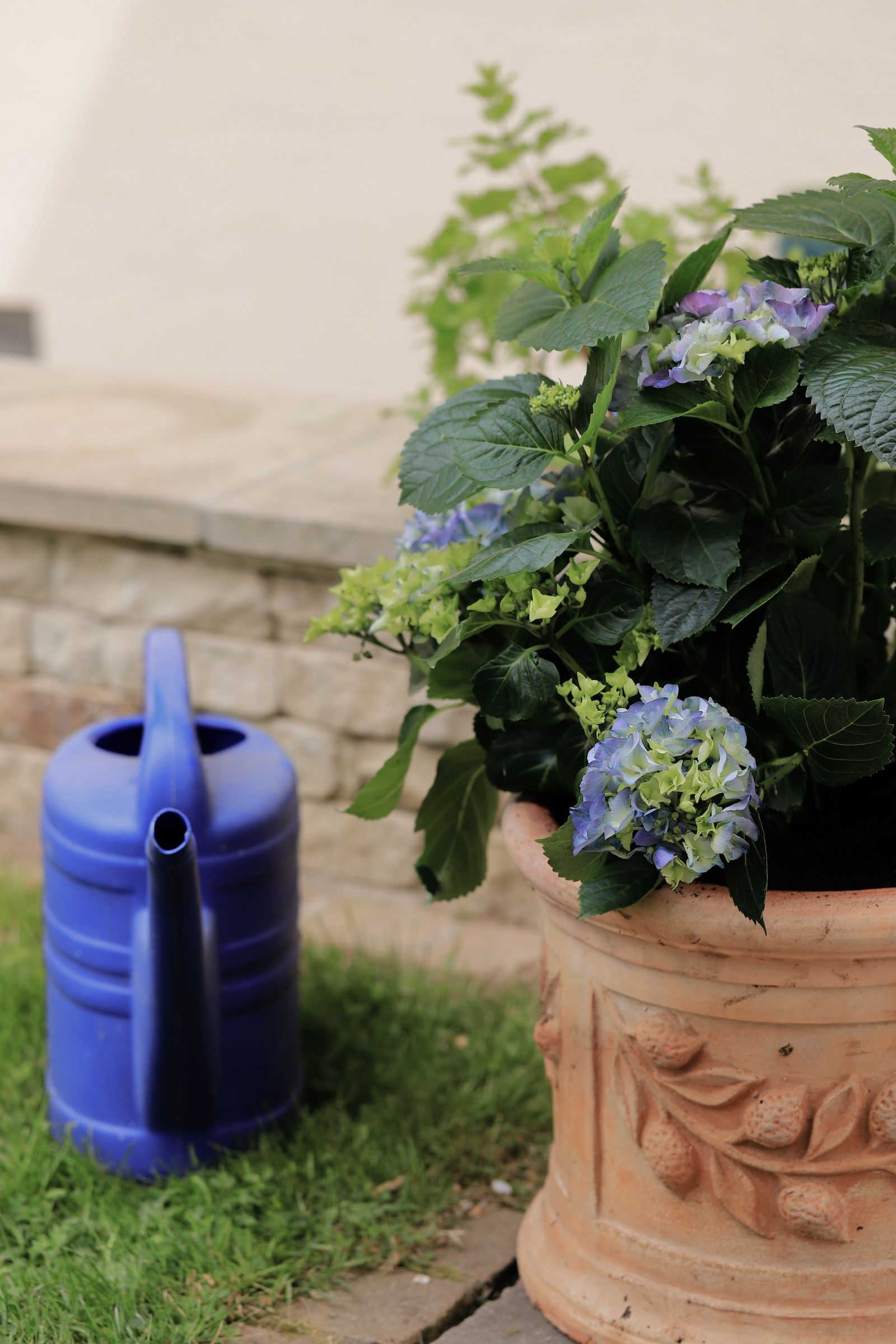
Photo: Christina & Peter / Pexels · free stock, attributed
Big-leaf and remontant hydrangeas (Hydrangea macrophylla and reblooming types) grow in balcony containers in USDA 6–8 when soil stays moist without saturation and afternoon sun is filtered. Full west exposure without shade cloth on rooftop slabs typically burns leaves and wilts flowers. Verify slab load before committing to large ceramic pots.
Materials and site
| Item | Specification |
|---|---|
| Pot (young shrub) | 15–30 L; larger cultivars need more volume |
| Mix | Acid-leaning open blend: peat or coir + bark + perlite |
| Light target | 4–6 hours morning sun or filtered afternoon — not all-day west blast |
| Shade | Shade cloth or taller screen plant for midday ≥30°C |
| Saucer | Emptied same day; chronic wet feet cause yellow leaves |
| Color shift (optional) | Aluminum sulfate or similar only on cultivars that respond; follow label rates |
Potting steps
- Remove the plant; loosen circling roots at the outer 1–2 cm only.
- Set at the same depth as in the nursery pot.
- Water until runoff; place in bright shade 3–7 days (mail-order settling).
- Move to morning sun / afternoon shade.
- Mulch the surface 1–2 cm with fine bark to slow drying.
Water, feed, and flower color
| Task | Practical range |
|---|---|
| Water | Even moisture; finger test at 5 cm; daily checks in ≥30°C |
| Feed | Dilute balanced liquid every 7–14 days in growth; excess nitrogen → leaves, fewer blooms |
| Blue tones | Acidic mix + available aluminum on color-shifting cultivars; start amendments before buds set |
| Pink tones | Higher pH / lower aluminum availability; avoid chasing both colors mid-season in one pot |
Morning soak plus mulch beats frequent shallow water that never rewets the core. Empty saucers after storms — rain plus full trays is a common root killer.
Problems (culture first)
| Symptom | First response |
|---|---|
| Powdery mildew / leaf spot | Improve airflow; remove worst leaves; avoid overnight wet foliage |
| Yellow leaves | Check drainage and saucers, then irrigation pH |
| Spider mites | Hot dry corners — rinse undersides every 2–3 days; see container roses mite notes |
Non-shifting white cultivars do not turn blue from acidification — select genetics at purchase. Rusty nails are not a reliable aluminum dose.
Month cues (zones 6–8)
| Month | Task |
|---|---|
| Apr–May | Pot up; bright shade while roots settle |
| Jun–Jul | Even moisture; shade cloth hot afternoons — heat watering |
| Aug–Sep | Deadhead or leave faded florets for dried look |
| Oct–Nov | Reduce feed; protect pots from early hard freeze in zone 6 |
Weight and placement
A 25–30 L hydrangea in wet mix requires a floor placement near a wall, not a mid-rail bracket. Estimate load in the weight tool before buying glazed ceramics. In heat waves, pair with rain lily / portulaca on sunnier outer rails rather than stressing the hydrangea.
Limitations
- Panicle types (H. paniculata) tolerate more sun but still need volume and water on hot slabs.
- Color chemistry depends on cultivar genetics plus soil — alkaline municipal water can push pink over time.
- Reblooming types may set fewer autumn flowers if summer drought cycles were severe.