Amaryllis in Winter Containers
Tight pot sizing, shoulder height, indoor bloom temperatures, and bulb reuse for Hippeastris on USDA 6–8 balconies and bright windows.
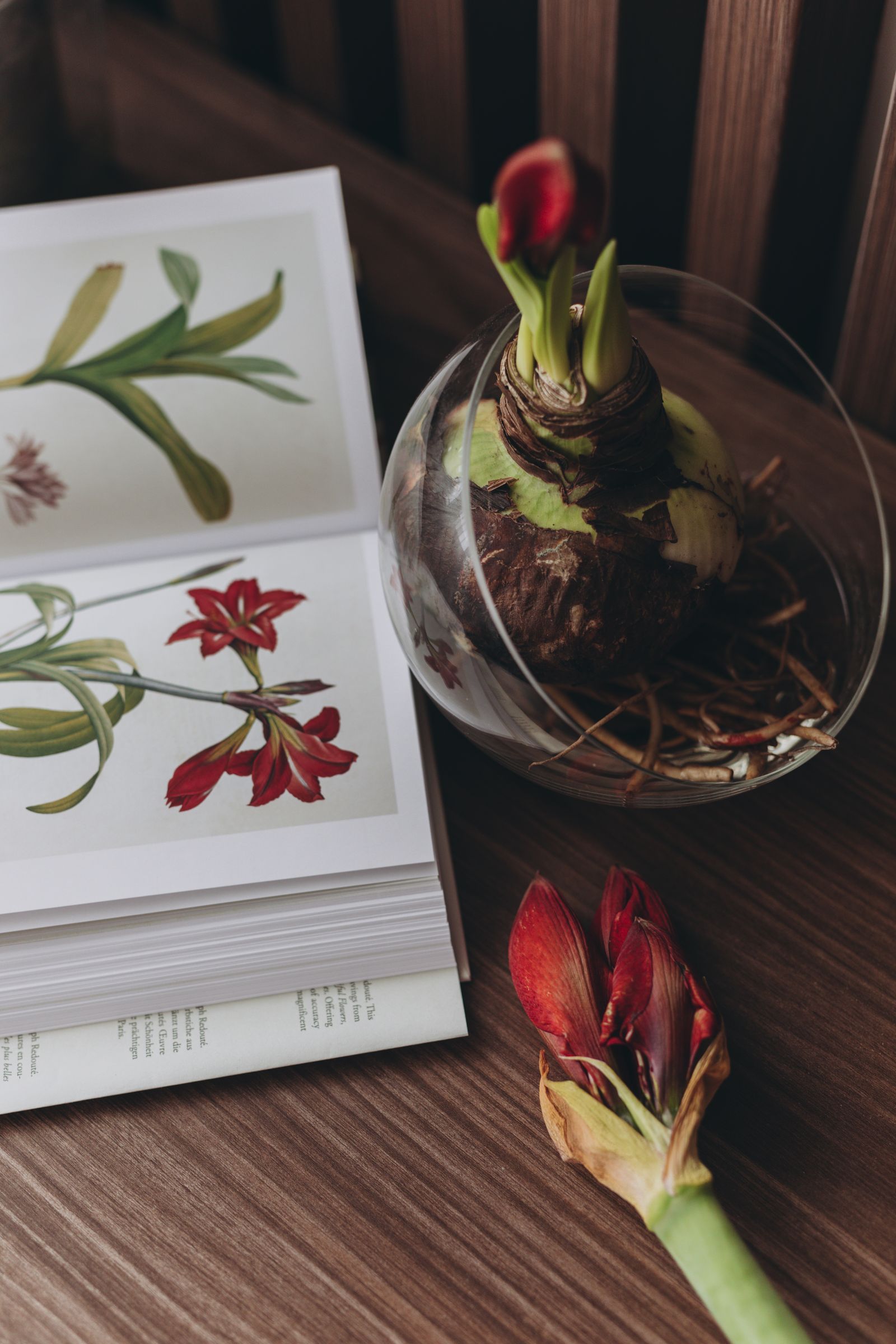
Photo: Alena Yanovich / Pexels · free stock, attributed
Amaryllis (Hippeastrum) supplies winter bloom indoors, then leaf recharging outdoors after frost risk. On USDA 6–8 balconies, outdoor winter color is limited — amaryllis fits bright windows and protected rails in spring and summer leaf phase.
Materials
| Item | Specification |
|---|---|
| Bulb | Firm; basal plate and roots intact |
| Pot | Only 2–3 cm wider than bulb diameter (tight pots bloom more reliably) |
| Mix | Open container blend; top third of bulb above mix line |
| Light | Bright south or east window indoors; bright shade → sun outdoors after frost |
| Support | Stake when stalk exceeds 30–40 cm or top is heavy |
Potting and watering steps
- Seat bulb so ~⅓ of the bulb sits above the mix surface.
- Water once to settle. Until shoot or root activity, keep lightly moist — not saturated.
- When stalk or leaves push, water when the top 2–3 cm is dry.
- Rotate pot ¼ turn weekly for upright growth.
- After bloom (or if leaves were present during bloom), dilute fertilizer every 10–14 days while leaves expand.
Temperature by phase
| Phase | Target |
|---|---|
| Indoor bloom | 16–20°C bright room; hotter dry air shortens flowers |
| Post-frost outdoors | Bright shade 1 week, then morning sun for leaf growth |
| Optional dormancy | 8–10 weeks cool 10–15°C, dryish, before restart |
After bloom
- Cut spent flower stalk to 1–2 cm above the bulb; keep leaves.
- Move outdoors after last frost for summer leaf photosynthesis.
- Maintain water while leaves are green unless forcing intentional dormancy.
- If mix smells sour and leaves collapse, unpot, trim black roots, repot in fresh mix, water sparingly.
Month cues (zones 6–8)
| Month | Action |
|---|---|
| Oct–Nov | Pot bulbs for indoor bloom |
| Dec–Feb | Stake stalks; water on finger test |
| Mar–Apr | Feed leaves; prepare outdoor move |
| May–Jun | Outdoors after frost risk |
| Jul–Aug | Full leaf growth; avoid scorch on hot glass |
| Sep | Optional dry rest for reuse cycle |
Troubleshooting
| Symptom | Likely cause | Fix |
|---|---|---|
| No sprout 4–6 weeks | Dormancy or cold wet rot | Check firmness; warm slightly; reduce water if soft |
| Tall floppy stalk | Low light | Brighter window; stake early |
| Bud blast | Heat or uneven water | Steady moisture; avoid heater draft |
| Leaves only, no stalk | Immature bulb or skipped leaf season | Grow foliage one full year |
| White crust on mix | Salt buildup | Flush with clear water; reduce feed strength |
Reuse checklist
- Label pot with bloom start date.
- After planned leaf yellowing, store bulb in paper bag at 10–15°C if forcing dormancy.
- Repot with fresh mix at restart — old mix compacts and stays wet.
- Discard bulbs with soft necks or sour odor.
Safety and related guides
Many ornamental bulbs irritate if chewed — position pots away from pets if needed. For outdoor chilled tulips and hyacinths, see winter bulbs in balcony pots. For autumn slab timing with other chores, see seasonal reset checklist.
Limitations
- Waxed “no-water” gift bulbs are single-use decor — not this container regimen.
- Re-bloom timing slips if summer leaves were weak or dormancy was skipped.
- Balcony wind can shred strap leaves — use a sheltered wall during outdoor phase.