Clematis on Balcony Supports
Container sizes, trellis hardware, light targets, and pruning cues for clematis on USDA 6–8 balconies without an in-ground bed.
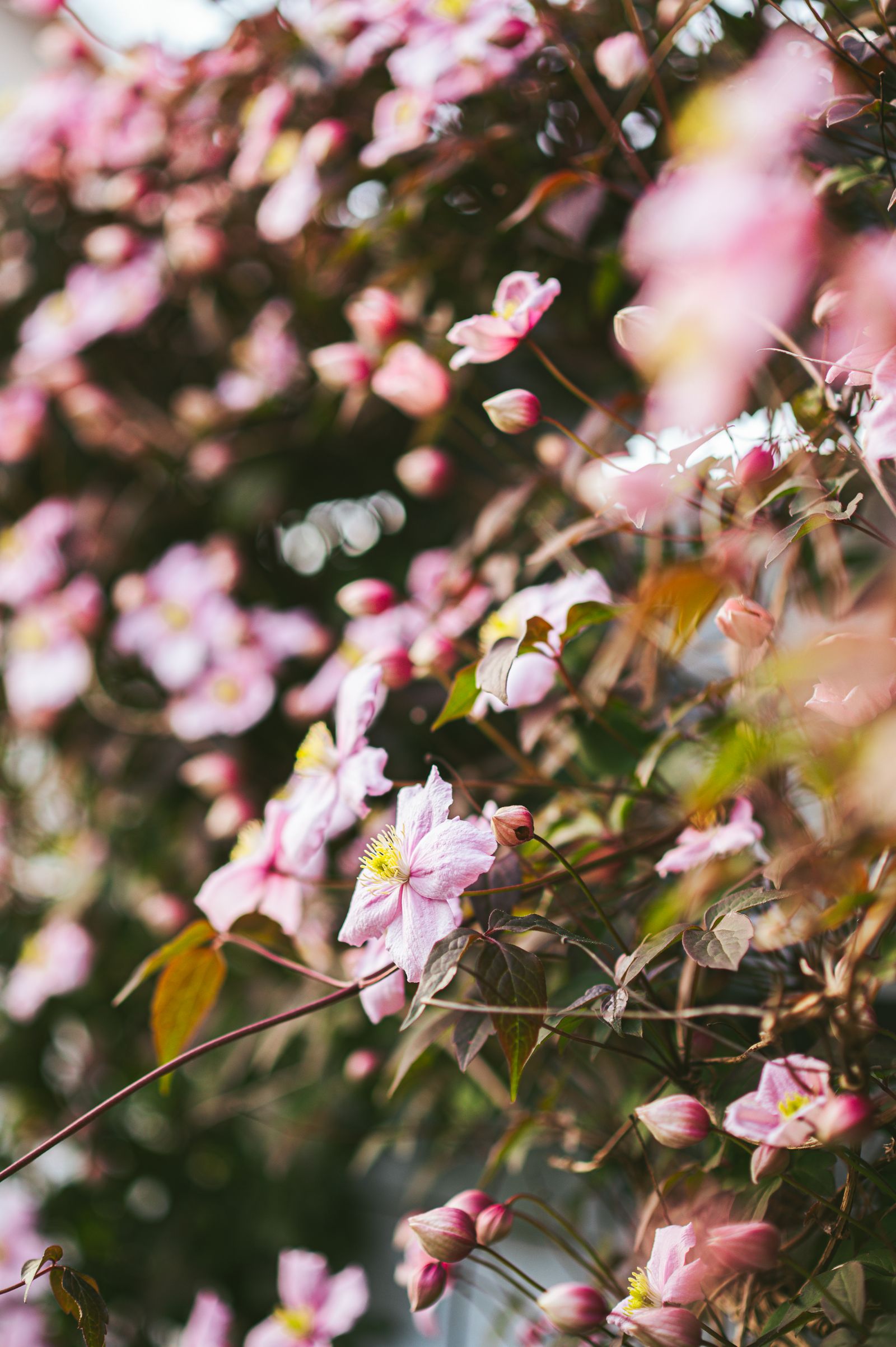
Photo: Jilly Noble / Pexels · free stock, attributed
Clematis needs long days of light and a support it can twine—not incidental contact with a wall. On USDA 6–8 balconies, an obelisk, railing mesh, or freestanding frame is standard. Fully glazed balconies with under 4 hours of sun and weak airflow are a poor first site; open or semi-open rails with ≥ 6 hours of direct or very bright open sky work better.
Materials
| Item | Specification |
|---|---|
| Starter plant | Nursery liner or 1–2 L pot |
| First container | 4–8 L; upsize when roots circle the pot wall |
| Mix | Open peat/coir + perlite + 10–20% fine bark; avoid heavy garden soil |
| Support | Steel or cedar obelisk, UV-coated mesh, or twine grid rated for outdoor wind |
| Attachment | Clamps or freestanding bases—check lease rules before drilling facade or rail |
| Feed | Balanced or bloom-leaning liquid, half label rate |
Planting procedure
- Inspect stems and roots. Trim dead wood to live tissue; wait until a bud breaks below a partial break before hard cuts.
- Tease circling roots lightly at the liner edge.
- Set the crown 2–5 cm below the finished mix surface unless the nursery tag states otherwise.
- Install support at planting time—retrofits disturb roots midseason.
- Soft-tie stems every 15–25 cm as they elongate; ties must not girdle.
- Water until runoff; maintain even moisture (not standing water) through establishment (2–4 weeks).
- Feed every 10–14 days during active spring growth at half strength.
Light, water, and pest targets
| Factor | Target |
|---|---|
| Light | ≥ 6 h sun or very bright open sky |
| Water | Even moisture; empty saucers within 30–60 min after watering |
| Summer heat | 30–40% shade cloth on west rails when afternoons ≥ 32°C |
| Mites / mildew | Airflow + occasional rinse; remove badly infected leaves |
Pruning by group (when the tag is missing)
Until you know the cultivar’s pruning group, remove only dead wood and light thinning after the main flush. Group 3 types tolerate hard cutback in late winter; Groups 1–2 can lose a season of bloom if cut hard at the wrong time. Match cuts to a reliable cultivar list or nursery label before February renovation.
Support hardware for wind
- Freestanding obelisks with a base ≥ 40% of height beat single canes in mix alone.
- Mesh panels need two secure attachment points—one point pivots in gusts.
- Re-check soft ties monthly; stems thicken quickly.
- Do not use a neighbor’s railing or baluster without written permission.
Container upsizing and weight
Mature clematis in a 15–25 L pot plus wet mix can exceed 15–20 kg. Run the pot and soil weight calculator before placing large tubs on shelves. Keep mature vines on the floor unless a rack rating covers the wet total.
Apply 1–2 cm fine bark mulch on the mix surface to keep roots cool. Do not leave saucers full overnight—wet crowns invite sudden collapse often mislabeled as “wilt.”
Variety selection for narrow rails
For rails under ~1 m wide, prefer labeled compact or container-friendly cultivars. Vigorous types outgrow 8 L by midsummer and demand constant water. Add low filler plants only after the vine is established; crowded bases stay damp and mildew-prone.
Seasonal tasks (zones 6–8)
| Month | Task |
|---|---|
| Mar–Apr | Pot or refresh mix; install support |
| May–Jun | Soft-tie; light feed |
| Jul–Aug | Steady water; west shade as needed |
| Sep–Oct | Late bloom on many types; tidy dead stems |
| Nov–Feb | Protect pots from freeze–soak in zone 6; insulate or move to sheltered wall |